1
Urgent
Homepage
Competing hero CTAs
Two primary CTAs in the hero split user focus and dilute the main conversion path.
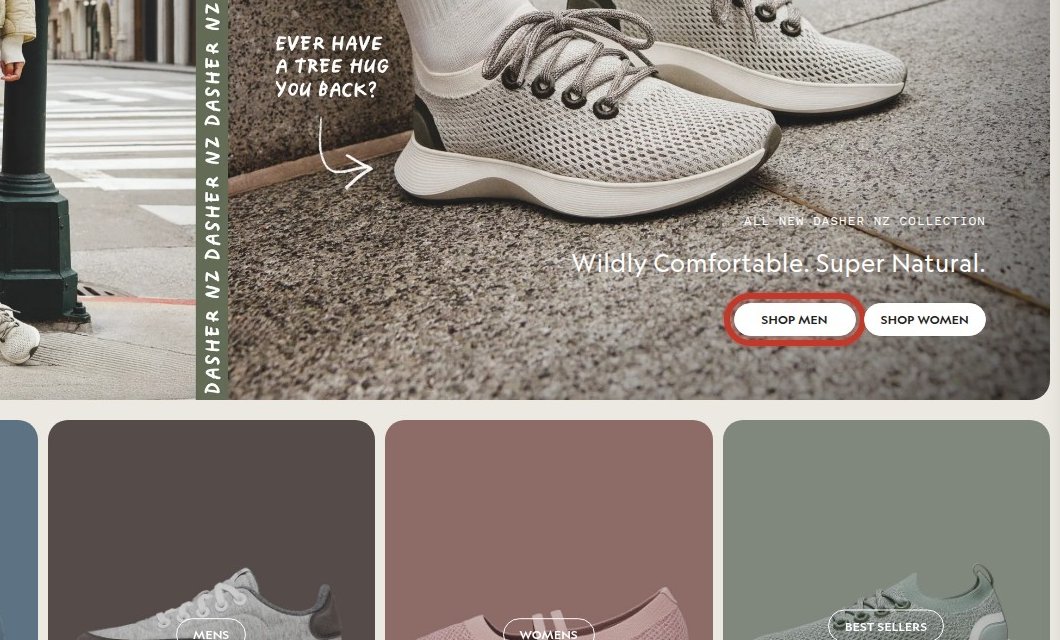
⚠ Competing hero CTAsThe hero presents two equally prominent CTAs, 'SHOP MEN' and 'SHOP WOMEN', forcing users to choose a gender before …
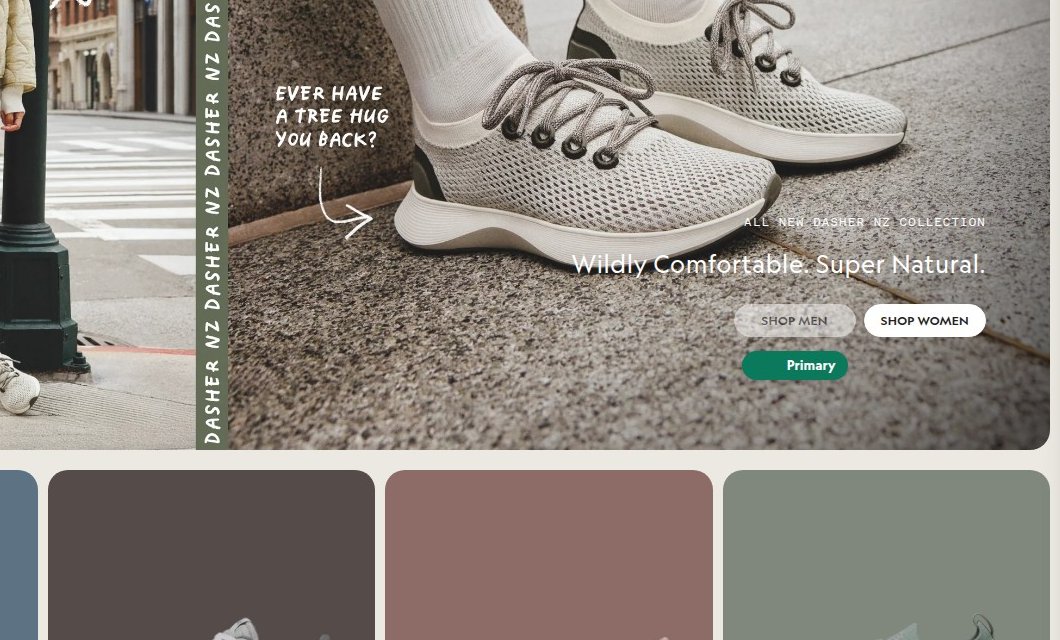
Both are photographs of the live page — the right side has the
change applied in the browser.
Evidence
Observed on the live site
✓ Flagged independently by 2 of 7 analysts
- Hero section contains both 'SHOP MEN' and 'SHOP WOMEN' CTAs, with no single dominant action.
- H1: 'Wildly Comfortable. Super Natural.' CTAs: 'SHOP MEN' and 'SHOP WOMEN' with no subhead visible in the crawl.
Business case
If this change wins
$70,762 – $283,046
annual opportunity if it wins
Medium
Effort — 2-5 days
40 days
A/B test duration
Prioritisation
PXL score: 5 / 10
| Question | Answer | Points |
|---|---|---|
| Is the change above the fold? | Yes | 1 |
| Is the change noticeable in under 5 seconds? | Yes | 2 |
| Does it add or remove an element? | Yes | 1 |
| Does it run on a high-traffic page? | Yes | 1 |
| Discovered via user testing? | No | 0 |
| Discovered via qualitative feedback (survey, support)? | No | 0 |
| Supported by heatmaps or session recordings? | No | 0 |
| Found via digital analytics or real-user field data? | No | 0 |
| Verified by direct technical measurement? | No | 0 |
Implementation
Hand this to your developer
- Surface
- Homepage — HOMEPAGE HERO
- Problem
- Two primary CTAs in the hero split user focus and dilute the main conversion path.
- Current state
- h1: Wildly Comfortable. Super Natural.; cta: SHOP MEN | SHOP WOMEN; notes: Both CTAs are equally prominent, forcing users to choose a gender before exploring products.
- Change
- h1: Wildly Comfortable. Super Natural.; cta: Shop All; notes: Single primary CTA to browse all products, with secondary gender links in nav.
- Acceptance criteria
- GIVEN a first-time visitor on the affected page
WHEN the change is live
THEN Single primary CTA to browse all products, with secondary gender links in nav, with no regression at 375px and 1280px widths. - Tracking
- event: cro_competing_hero_ctas on interaction with the changed element; verify it fires in BOTH variants before opening traffic.
- Success metric
- conversion rate on the affected step
- QA checklist
- Chrome / Safari / Firefox · 375px + 1280px · keyboard reachable · screen-reader name present · no CLS introduced
- Effort
- Medium — 2-5 days
- Test plan
- 118,817 visitors per variant (95% significance, 80% power); 40 days.
- Rollback
- Feature-flag the change; revert the flag if the primary metric drops for 3 consecutive days.