5
High
Homepage
Rotating hero headlines
The article page displays multiple H1s, creating a rotating hero effect that confuses the primary topic and dilutes the article's focus, undermining the visitor's expectation of a single clear story.
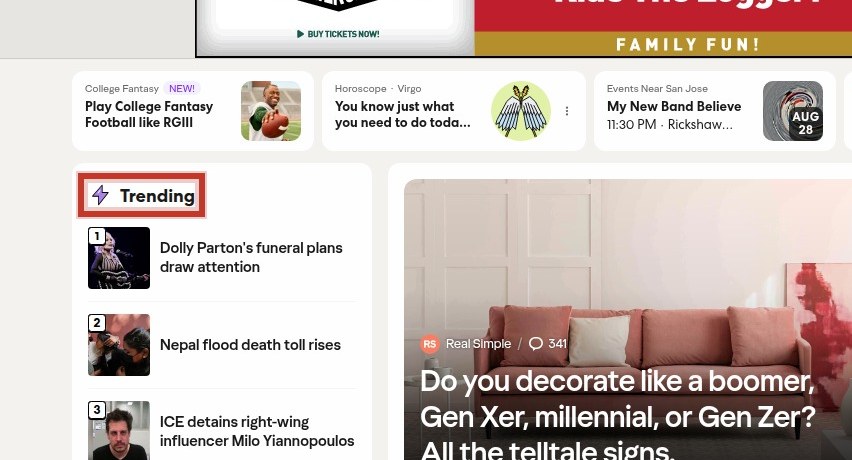
⚠ Rotating hero headlinesThe page displays multiple H1s in a rotating hero, confusing the primary topic.
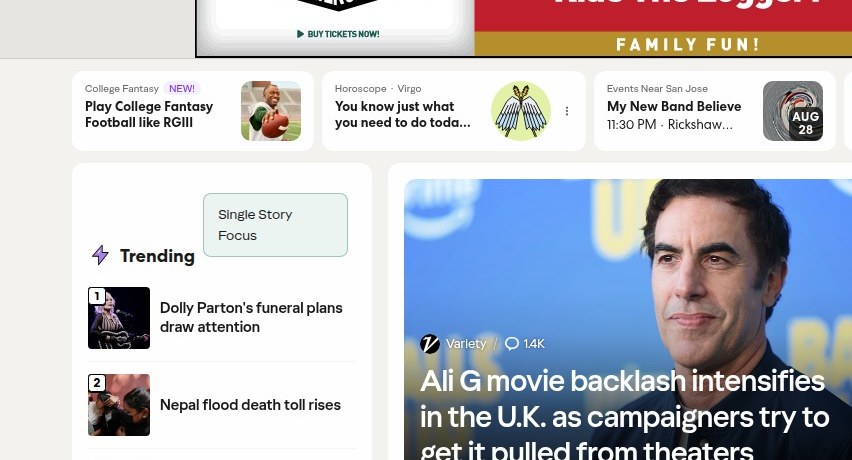
Both are photographs of the live page — the right side has the
change applied in the browser.
Evidence
Observed on the live site
✓ Flagged independently by 1 of 7 analysts
- H1s: ['J.J. McCarthy to miss Broncos game, reportedly ‘not comfortable’ after injury', 'Raiders still not ready to name starting quarterback after final preseason game', 'NFL Preseason Blitz: Falcons QB Tua Tagovailoa booed in Miami return, but shows a little improvement']
- The page shows three H1s, likely from a carousel or related stories, which can confuse users about the main article.
Business case
If this change wins
0.2 – 1.0
orders per 1,000 visitors
Low
Effort — 0.5-2 days
Not A/B testable
At typical traffic
Detecting this needs about 315,206 visitors per variant. Ship it as a sequenced change and log the date instead.
Prioritisation
PXL score: 5 / 10
Assessed from the live page
| Question | Answer | Points |
|---|---|---|
| Is the change above the fold? | Yes | 1 |
| Is the change noticeable in under 5 seconds? | Yes | 2 |
| Does it add or remove an element? | Yes | 1 |
| Does it run on a high-traffic page? | Yes | 1 |
| Verified by direct technical measurement? | No | 0 |
Criteria that need your data
4 of these could not be answered from the live page. Session recordings, survey or support themes, and analytics access would raise the confidence of this ranking — they do not indicate a weaker finding.
| Question | Answer | Points |
|---|---|---|
| Discovered via user testing? | No | 0 |
| Discovered via qualitative feedback (survey, support)? | No | 0 |
| Supported by heatmaps or session recordings? | No | 0 |
| Found via digital analytics or real-user field data? | No | 0 |
Implementation
Hand this to your developer
- Surface
- Homepage — SPORTS ARTICLE HERO
- Problem
- The article page displays multiple H1s, creating a rotating hero effect that confuses the primary topic and dilutes the article's focus, undermining the visitor's expectation of a single clear story.
- Current state
- h1: Multiple H1s (three headlines); cta: Sign in / Watch / Schedule / Get Fantasy Plus / Watch on X; notes: The page shows three H1s, likely from a carousel or related stories, which can confuse users about the main article.
- Change
- h1: J.J. McCarthy to miss Broncos game, reportedly ‘not comfortable’ after injury; cta: Read the full story; notes: Ensure only one H1 is present, matching the article's title, and remove or demote other headlines to H2s to maintain clarity and focus.
- Acceptance criteria
- GIVEN a first-time visitor on the affected page
WHEN the change is live
THEN Ensure only one H1 is present, matching the article's title, and remove or demote other headlines to H2s to maintain clarity and focus, with no regression at 375px and 1280px widths. - Tracking
- event: cro_rotating_hero_headlines on interaction with the changed element; verify it fires in BOTH variants before opening traffic.
- Success metric
- organic sessions for the affected pages
- QA checklist
- Chrome / Safari / Firefox · 375px + 1280px · keyboard reachable · screen-reader name present · no CLS introduced
- Effort
- Low — 0.5-2 days
- Test plan
- 315,206 visitors per variant (95% significance, 80% power); duration depends on traffic.
- Rollback
- Feature-flag the change; revert the flag if the primary metric drops for 3 consecutive days.